

About the tower
Tower instrument, known as the "separation heart" of modern process industry, stands a kind of cylindrical equipment, that is, tower instrument, in the huge installation area of petroleum refining, chemical industry, pharmaceutical and other process industries. As the core equipment to realize the separation, purification and chemical reaction of the mixture, the tower instrument allows gas and liquid to contact backflow through the internal precise tower plate to complete key processes such as distillation, absorption and desorption. Its separation efficiency directly determines the purity, yield and economic benefits of the whole device of the final product. The manufacturing and installation accuracy of the tower, especially its verticality, internal horizontality, takeover direction and other geometric parameters, is the lifeline to ensure its safe, efficient and long-term operation.
The importance of tower instrument detection
With the increasingly strict engineering standards and the popularization of digital delivery, the implementation of three-dimensional precision testing of tower instruments has become a rigid requirement. Traditional testing methods, such as perpendicular lines, level meters, etc., are relatively low in efficiency, and it is difficult to obtain comprehensive and quantitative spatial data, and it is difficult to meet the requirements of data-driven decision-making in modern projects. Digital three-dimensional detection establishes a "digital twin" model for the tower instrument through high-precision spatial coordinate measurement, and realizes the accurate control of the whole life cycle from manufacturing, installation to operation and maintenance. It is an indispensable technical cornerstone for preventing deformation, guiding installation, verifying quality, supporting transformation and other links.

Figure 1: A certain model of tower device
API laser tracking tower three-dimensional detection solution
With the unique advantages of large-scale, high-precision and real-time feedback, the API laser tracker can meet the needs of precision geometric detection of the tower instrument. Its core testing content includes:
1. Macro shape tolerance detection
√ Straightness and verticality of the tower: measure the spatial trajectory of the section and the center line of the whole tower to ensure that it meets the design requirements;
√ Roundness and diameter of the cylinder: analysis of the roundness of each segment port and typical cross-section, control the ellipse, and ensure the installation conditions of the internal parts.
2. Installation accuracy detection of key internal components
√ Support circle/support beam detection: height and horizontal measurement are the basis of the level of the tower plate or packing bed, which directly affects the uniformity of gas-liquid distribution;
√ Tower plate assembly detection: accurate measurement of the flatness of the tower plate, the height consistency of the overflow weir, the verticality and spacing of the liquid plate;
√ Coaxiality of the inner part: evaluation of the center of the multi-layer inner part and the theoretical axis of the tower.
3. External interface and auxiliary structure detection
√ Take over flange: center coordinates, flange normal direction (amuth angle and tilt angle), flatness and bolt hole distribution circle detection;
√ Platform ladder and tower pipeline: spatial position and interference inspection.
4. Manufacturing and installation process control
√ Segmented pre-assembly and ring seam pairing: guide the on-site assembly after the segmented manufacturing of large towers, and control the amount of misalignment and gap uniformity;
√ Foundation and skirt seat: Check the surface flatness and the position of the base bolt hole on the foundation board.
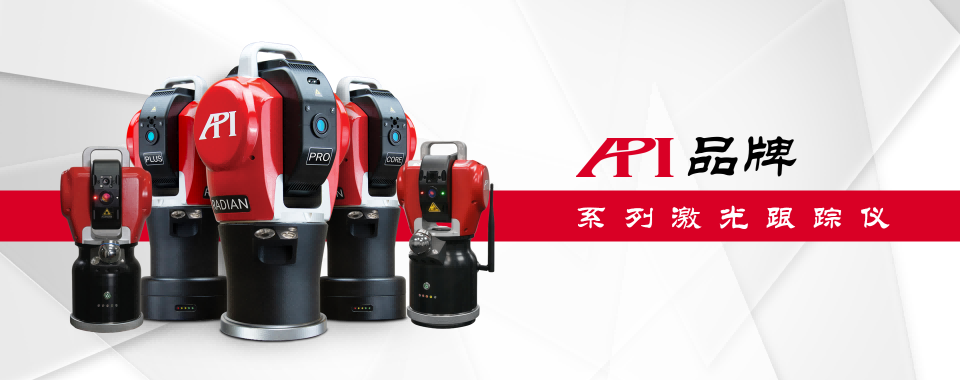
Figure 2: API series laser tracker (model from left to right: iLT / Radian Plus / Radian Pro / Radian Core / iLTx)
Introduction to the technical advantages of API laser tracker
Among many measurement tools, API brand Radian and iLT series laser trackers provide accurate and efficient solutions for tower detection with excellent engineering design and stable measurement performance.
Radian laser tracker is a high-precision 3D/6D measuring instrument with a large measurement range. It has a micron (μm) level accuracy, a measurement radius of more than 80 meters, and a super-large measurement angle range. It is compact and compact in design, and can be installed and work in any posture, which can fully Meet the requirements of measurement accuracy, efficiency, range, etc. in each link of the tower measurement; among them, Radian Plus and Radian Core models also adopt battery-powered and wireless communication systems, which can completely get rid of the constraints and troubles of various cables, making the whole measurement process easier. Control.
Just set up the Radian laser tracker next to the standard to be measured to start the operation and measurement; when measuring, set the Radian laser tracker in the system coordinate system, and the emitted laser will track the SMR (tracker target) in the operator's hand. The operator only needs to hold the target and touch the data to be collected. For the part to be tested, the tracker will automatically collect the three-dimensional measurement data of the counting point, send it to the laptop and record it in the measurement software for subsequent processing and analysis.
After the data information of all the parts to be tested is collected, the operator can set, analyze and compare these data with the nominal value in the measurement software, so as to obtain the error of the actual value and achieve the effect of detection.
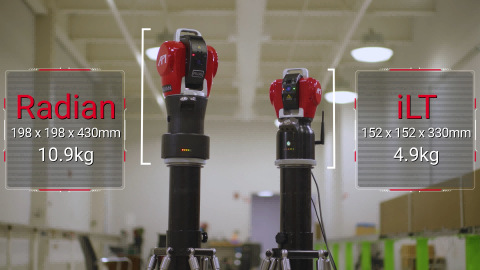
Figure 3: Radian (left) and iLT (right) laser trackers
The newly launched iLT laser tracker further reduces the overall size of the laser tracker by 50% (compared with the Radian series) on the basis of fully wireless measurement. The weight of the whole machine is only 4.9Kg, giving full play to the portable properties, fully satisfying and suitable for going out, outdoor, Application environments such as narrow space and multi-machine integration.
Measurement operation process
1. On-site program formulation and base station erection
According to the size of the tower and the detection focus, the tracker station is planned, and usually a position that can see most of the detection areas and the foundation is stable. Based on the high integration and portability of API laser tracker, it can be flexibly installed.
2. Establish a global unified coordinate system
On the tower base or skirt, measure at least three reference points of known design coordinates (or establish temporary benchmarks) through supporting software (such as SpatialAnalyzer, Polyworks, Metrolog, Verisurf, MeasurePro, etc.) Carry out the optimal fitting alignment of the coordinate system and establish an absolute benchmark for detection.

Figure 4: Tower measuring site (I)
3. Accurate measurement of key features and real-time adjustment guidance
The operator only needs to touch the measurement position with the tracker target ball with a built-in prism in his hand (please refer to Figure 4) to record the spatial coordinate detection of the position to be tested and transmit it to the measurement software on the laptop for follow-up analysis. In addition to using traditional target balls for measurement, API laser tracker measurement accessories can also be selected to detect relevant data according to actual measurement needs. ( For example: cooperate with vProbe probe to implement hidden point measurement; cooperate with iScan3D for fast point cloud acquisition; cooperate with ActiveTarget active target to realize automated data collection; cooperate with STS six-dimensional sensor to achieve accurate measurement of 6DoF data, etc., please refer to Figure 5 and Figure 6) .
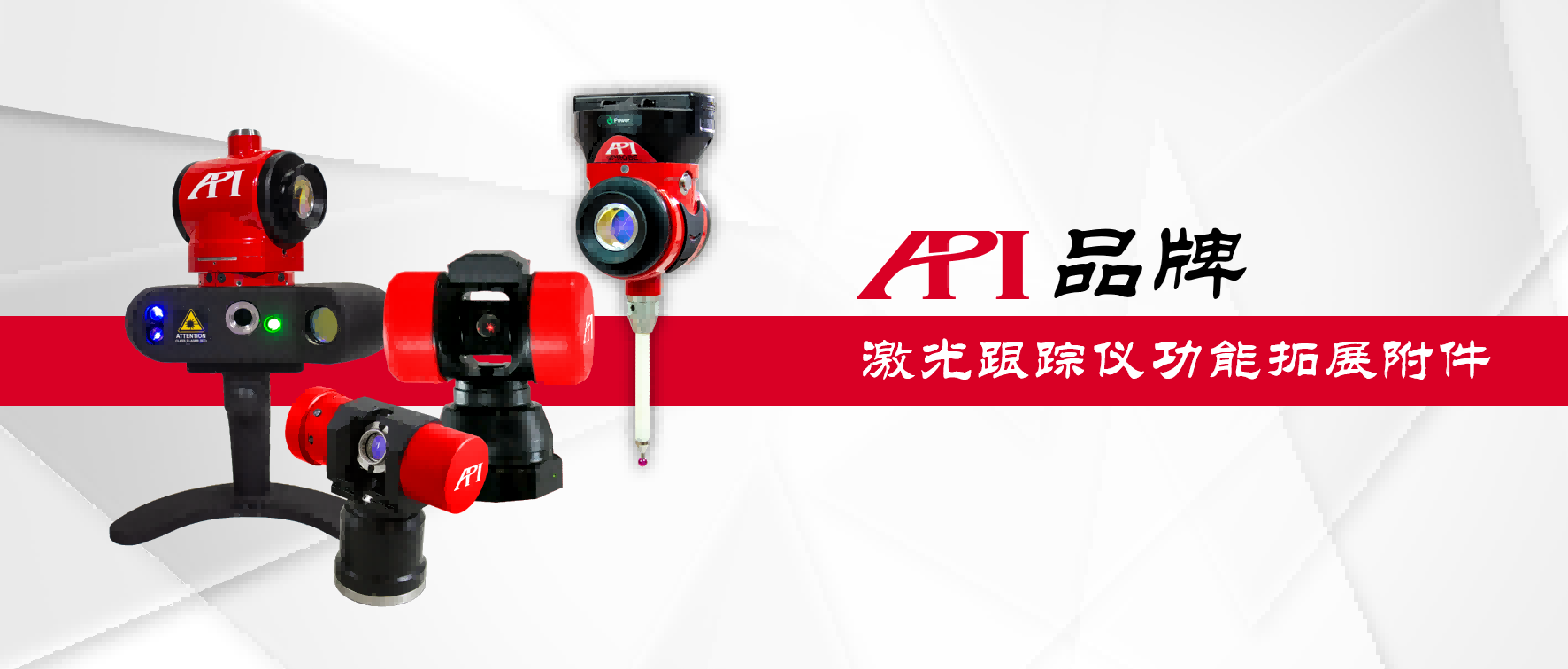
Figure 5: API laser tracker measurement accessory (from left to right: iScan3D / ActiveTarget / STS / vProbe)
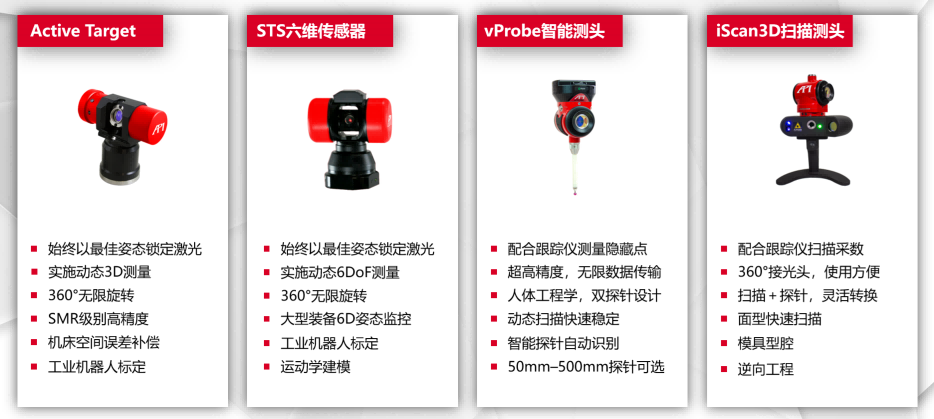
Figure 6: Introduction to the function of the tracker measurement accessory
4. Measurement data analysis
Through the measured point cloud data, the corresponding lines, surfaces, bodies, etc. can be constructed, and the measurement data analysis can be carried out according to the detection needs.

Figure 7: Tower measuring site (II)

Figure 8: Tower Instrument Measurement Site (III)
Survey site
The on-site operation content of the measurement case in this article is: spatial trajectory measurement of the center line of the tower segment.
When measuring, the operator first places the API laser tracker at one end of the tower device, and then collects the spatial points on the inner wall of the tower cylinder, and synthesizes the corresponding circle according to different positions to calculate the center position of the circle. After the calculation of multiple center positions, the straightness of the center line can be evaluated according to the corresponding XYZ value, so that Achieve the purpose of testing.

Figure 9: Measurement Data and Analysis (I)

Figure 10: Measurement Data and Analysis (II)
Sum up
API laser tracker solution, with excellent measurement accuracy, strong environmental adaptability, intelligent human-computer interaction and efficient real-time feedback ability, has upgraded the detection experience in the process of tower manufacturing and installation to a new dimension.
It is not only a "diagnostic device" to find problems, but also a "navigator" to guide accurate construction. The API laser tracker ensures the horizontal placement of each tower plate, the precise position of each flange, and even the upright standing of the whole tower. It has greatly shortened the construction period, eliminated potential operation risks, and provided a solid measurement guarantee for the safe, efficient and long-cycle operation of large-scale industrial installations.