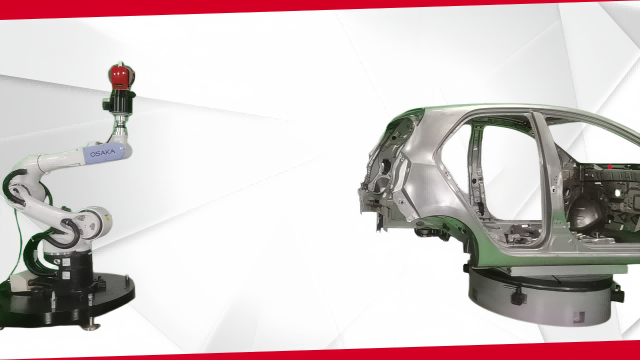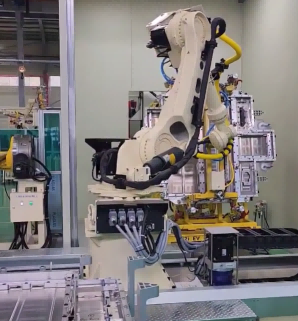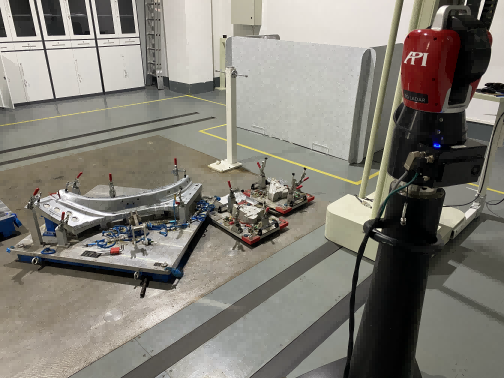
Overview
The API brand's dynamic 9D LADAR significantly enhances the efficiency of the traditional laser radar (Laser Radar) in performing non-contact inspections of the body-in-white, demonstrating impressive performance in many aspects, including speed, precision, flexibility, portability, and repeatability.
Problems Encountered in Production
With the development of human civilization and science and technology, the automotive industry has entered a new stage. To produce better automotive products, the demands for car manufacturing processes continue to rise. In production, smaller tolerances and higher efficiency are key elements of current automotive manufacturing processes. According to Frost & Sullivan's "A Paradigm Shift of In-Line Inspection in Body-in-White," 97% of surveyed industry respondents believe that improving internal efficiency is a critical factor for enhancing industrial manufacturing capabilities.
One key point is dimensional inspection processes. The industry is promoting the concept of measuring moving bodies-in-white directly on the assembly line. This concept implies that hundreds of high-precision measurements will be completed quickly on the production line without interrupting the line's operation. This poses a significant challenge for inspection processes.
Frost & Sullivan's analysis of dimensional measurement systems indicates that laser radar (Laser Radar) technology is the "best-in-class" solution for online inspection of bodies-in-white. They state: "Laser Radar is a fully automated, multifunctional system that brings non-contact measurement to the production line. The system can operate without a target and provides high-precision inspections. It is a novel approach, with excellent capability to measure both surfaces and feature details, fulfilling all dimensional inspection requirements of bodies-in-white. Laser Radar measurement systems offer advantages over traditional coordinate measuring machines (CMMs) or other measurement devices, particularly in terms of convenience and efficiency."
API has always closely followed the latest concepts and goals of online body-in-white inspection and, through extensive industry surveys and exchanges, has summarized that current laser radar (Laser Radar) measurement technology has not yet fully realized the highest goals of online inspection. Based on nearly 40 years of brand experience in high-performance sensors and high-precision dimensional measurement, and by targeting actual industry needs, API has developed the all-new dynamic 9D LADAR, which provides significant improvements over traditional laser radar (Laser Radar) in accuracy, efficiency, flexibility, and repeatability, offering automakers measurement solutions that approach the highest manufacturing standards in the industry.
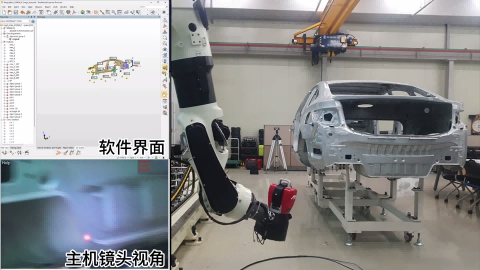
Figure 1: On-site integration and application of API 9D LiDAR in automobile production
Breakthrough Dimensional Measurement Solution
The API brand 9D LiDAR (9D LADAR) adopts Optical Frequency Chirping Interferometry (OFCI) technology, making it suitable for non-contact, precise measurement of workpieces or target objects in various environments such as workshops, laboratories, and the field under complex conditions. It offers extremely high measurement accuracy and exceptional measurement efficiency, enabling rapid acquisition of workpiece dimensions and surface geometry data.
Based on OFCI technology, the 9D LiDAR generates broadband optical interference during operation, detects interference signals, and collects measurement data. Its sensitivity is over 100 times higher than conventional LiDAR, providing greater measurement accuracy and better measurement efficiency. The 9D LiDAR delivers micrometer-level measurement precision, a data acquisition rate of 20 kHz, and is less susceptible to external environmental influences during measurement, effectively avoiding common issues faced by conventional LiDAR such as high dependency on material reflectivity, limited incidence angle range, and susceptibility to environmental noise.
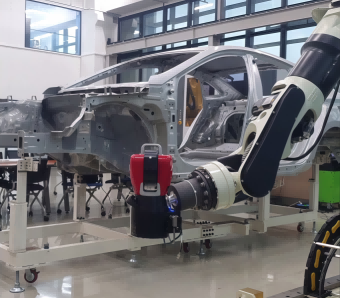
Figure 2: On-site integration and application of API 9D LiDAR in automobile production
Technological Advancements of 9D LiDAR Compared to Conventional LiDAR
1. Speed: The 9D LiDAR (9D LADAR) collects measurement data at a speed of 20,000 points per second, with a scanning speed of 0.2 seconds/cm². Currently, known conventional LiDAR (Laser Radar) only reaches a data collection rate of up to 1,000 points per second and the fastest scanning speed of 1 second/cm².
2. Accuracy: The 3D measurement accuracy of 9D LiDAR is 25μm 6μm/m, while the 3D accuracy of conventional LiDAR is 20μm 14.5μm/m.
3. Flexibility: 9D LiDAR has a horizontal rotation range of ±320° and an incidence angle of ≥85°; conventional LiDAR usually only has a horizontal rotation range of ±180° and an incidence angle of 45°.
4. Portability: 9D LiDAR features a compact design with an integrated control box, weighing only 10.4 kg; conventional LiDAR often weighs around 30 kg and comes with an additional external control box. In terms of size, 9D LiDAR is smaller than conventional LiDAR, making it more convenient to mount on industrial robots, gantry coordinate measuring machines, or integrate into production lines.
5. Repeatability: The average repeatability error of 9D LiDAR is 35μm, while conventional LiDAR has 150μm.
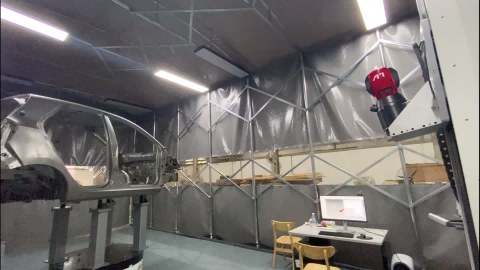
Figure 3: On-site integration and application of API 9D LiDAR in automobile production
Solving Problems Encountered by Conventional LiDAR in Production
In actual production, measuring a white car body often requires hundreds of specific positions to be checked. However, conventional LiDAR (Laser Radar) measurement technology, due to its own functional and characteristic limitations, cannot achieve the most ideal measurement results in certain processes. The advent of 9D LiDAR (9D LADAR) has overcome the problems faced by conventional LiDAR in actual production in the following ways:
Problem 1: During measurement, every time a conventional LiDAR moves and changes position, it must relocate itself relative to the white car body. Based on its performance, this positioning process is relatively cumbersome and often requires frequent use of scanning "positioning spheres" to continue precise measurement of the target white car body. In contrast, 9D LiDAR, based on its own principles and excellent performance, greatly simplifies this cumbersome positioning process, even allowing the use of positioning spheres to be completely avoided (with Radian laser trackers providing real-time precise positioning).
Problem 2: The biggest issue with conventional LiDAR technology is scanning speed. Current conventional LiDAR systems scan at only 1,000 points per second, while API 9D LiDAR can scan up to 20,000 points per second, effectively solving the problem of slow measurement speed associated with conventional LiDAR.
Problem 3: Incident angle capability. Present conventional LiDAR systems can achieve accurate measurement at a 45° incident angle, whereas 9D LiDAR can accurately measure parts at incident angles exceeding 85°. This means that compared to conventional LiDAR, 9D LiDAR can measure the same amount of data with fewer position moves.
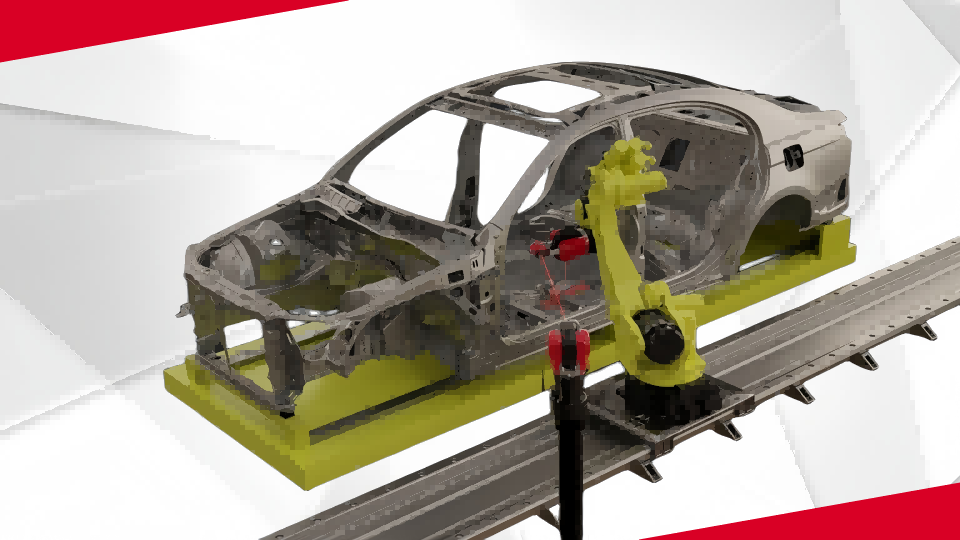
Figure 4: API 9D LiDAR measurement operation of the white car body based on real-time precise positioning with Radian laser tracker
9D Lidar and 6-DoF Laser Tracker Combined Solution
For operations that demand extreme measurement accuracy, a solution combining the 9D Lidar and the Radian Laser Tracker, both under the API brand (as shown in Figure 3), can be used. This solution leverages the 9D Lidar’s efficient, non-contact scanning capabilities to acquire a large amount of point cloud data, while the Radian Laser Tracker provides real-time tracking and positioning for the 9D Lidar. This approach allows for the rapid and efficient acquisition of extensive point cloud data while simultaneously achieving infinitely precise robot posture, truly combining extreme high accuracy with high efficiency.
Conclusion
With faster scanning speeds, a larger incident angle range, and higher data sampling rates, using the API 9D Lidar (9D LADAR) for body-in-white measurement operations can improve work efficiency by four times or more compared to using conventional Laser Radar. When extreme measurement accuracy is required, it can also be paired with the API Radian Laser Tracker to perform global real-time tracked scanning measurements. This ensures high-quality, high-standard measurements during efficient inspections, providing an ultimate guarantee of measurement precision.
More 9D LiDAR automotive production application demonstrations: